DLTK's Crafts for Kids
Printable Crafts for Kids
Indigenous Peoples of North America (First Nations, Inuit, and Native American)
These crafts are designed to support children learning about Indigenous peoples of North America. Each activity is paired with a short introduction to the culture it comes from. Indigenous cultures are diverse and living—these examples highlight just a few traditions from specific nations and regions.
Where possible, support Indigenous artists and communities by purchasing art and educational materials directly from them or through reputable sources that fairly compensate creators.
 |
First Nations (various communities across Canada) Bannock is a simple bread that became part of many First Nations food traditions after the introduction of flour by European settlers. Over time, different communities adapted bannock into their own cooking styles—some bake it, some fry it, and some cook it over an open fire. Today, bannock remains an important and widely enjoyed food, often shared at gatherings, celebrations, and community events. |
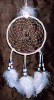 |
Ojibwe Dream catchers come from the Ojibwe people. Traditionally, they were hung near where children slept. The woven web is said to catch bad dreams, while good dreams pass through. Today, dream catchers are widely recognized, but their origins and meaning are rooted in Ojibwe culture. This craft can be used as an opportunity to talk about how cultural items can spread beyond their original communities. |
 |
Inuit An inukshuk is a stone structure traditionally built by Inuit people in the Arctic. These structures are used as markers—to guide travelers, mark important places, or help with navigation across wide landscapes. Each inukshuk is built with purpose. This activity can be used to talk about how people use their environment to communicate and travel safely. |
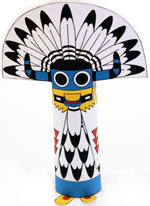 |
Hopi and other Pueblo peoples Kachina dolls are part of the cultural and spiritual traditions of the Hopi and other Pueblo peoples of the southwestern United States. These dolls represent Kachinas—spiritual beings connected to nature, weather, and community life. Traditionally, Kachina dolls are carved from wood and given to children as teaching tools. They help pass down knowledge about the many different Kachinas and their roles in the world. |
 |
Plains Nations such as the Lakota and Blackfoot Confederacy A tipi is a type of home used by some Indigenous peoples of the Great Plains. It is designed to be strong in windy conditions and easy to take down and move. This made it well suited to communities who traveled seasonally, often following bison. Tipis are carefully constructed and have important cultural meaning. This craft can be used to explore how people design homes based on their environment. |
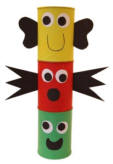 |
Northwest Coast peoples such as the Haida, Tlingit, and Kwakwaka'wakw Totem poles are large carved wooden poles created by some Indigenous peoples of the Pacific Northwest Coast. They can represent family history, important events, or cultural stories. The figures on a totem pole are meaningful and are often read from bottom to top. Rather than choosing animals at random, this craft can be used to tell a story—about a family, a memory, or something important to the child. |